Start with the baseline: the equipment you already use, how long it runs, and the service it provides. A comparison that silently replaces an unusually inefficient appliance may look impressive but tell you little about upgrading a modern one. Ask what changes in your home, not what changed in a promotional demonstration.
Separate energy from money. Electricity use is commonly measured in kilowatt-hours, while your bill depends on tariffs, standing charges, timing and other local arrangements. Reducing consumption does not automatically reduce every part of the bill. Conversely, shifting a load to a cheaper period may reduce cost without reducing energy use.
Ranked by the strength of the underlying case
Efficient lighting where inefficient lamps remain
A strong starting point when the existing lamp consumes substantially more power for the required light output. Compare lumens, suitable fittings, operating hours and light quality—not wattage alone.
Measurement for a suspected, controllable load
A suitable energy monitor can clarify a decision when uncertainty is the problem. It earns its place by leading to an action, not by displaying a colorful chart.
Controls for a predictable scheduling problem
Smart plugs or compatible heating controls can help when equipment runs unnecessarily. They are less compelling when good schedules or efficient controls already exist.
Make the calculation visible
The basic electricity calculation is power reduction in kilowatts multiplied by avoided operating hours. Annual cost reduction then depends on your applicable unit rate. Deduct the new device’s own consumption, subscriptions and recurring maintenance. If usage changes after the upgrade, adjust the calculation rather than treating the original estimate as a guarantee.
Illustrative calculation: reducing a 20-watt load for 5 hours a day avoids 36.5 kWh over 365 days. Multiply by your electricity unit rate, then subtract any control-device consumption and fees. This is not a typical-savings promise.
Simple payback divides the upfront cost by a credible annual net saving. It is a rough screening tool, not a financial forecast: prices, behavior, equipment life and future tariffs can all change. If estimated savings are tiny, improved comfort or convenience may still justify the device, but describe that benefit honestly.
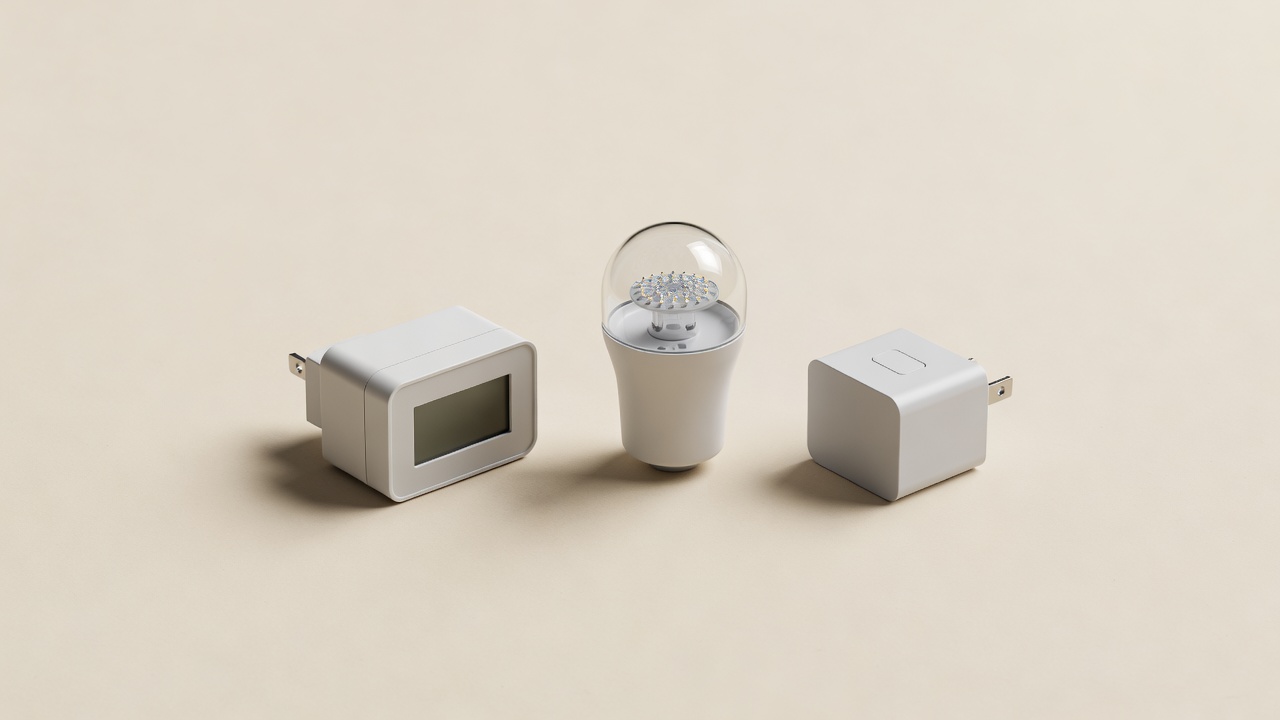
Smart plugs have limits
Check voltage, current rating, load type and the manufacturer’s restrictions. A headline maximum rating does not mean every appliance is suitable. Motors, heaters and equipment with special control requirements may present additional constraints. Never bypass safety controls or use a plug to make unattended operation acceptable when the appliance instructions prohibit it.
Do not casually interrupt refrigeration, medical equipment, security systems or devices that need a controlled shutdown. Check whether a device safely resumes after power returns. For high-power or fixed equipment, obtain qualified advice rather than adapting the installation around a convenient app feature.
| Claim | Missing question | Useful evidence |
|---|---|---|
| “Cuts energy use” | Compared with what? | Baseline equipment and equivalent service |
| “Pays for itself” | At which tariff and usage? | Calculation including purchase and ongoing costs |
| “Learns your home” | Does that improve your existing schedule? | Compatible system and realistic control scenario |
Heating controls depend on the system
A thermostat cannot be evaluated separately from the heating or cooling equipment it controls. Check wiring, power requirements, supported system type and installation guidance. Heat pumps, multi-stage systems and zoned installations may need controls designed for their operating characteristics. A generic compatibility claim is not a substitute for checking the exact equipment.
Potential savings depend heavily on previous settings, occupancy, weather and comfort needs. A home already running a sensible schedule may have less avoidable use than a poorly controlled one. Do not compromise safe temperatures, ventilation or protection against damp and freezing to chase a percentage.
Use labels as evidence, not a complete answer
In the United States, ENERGY STAR identifies products meeting relevant program criteria, while EnergyGuide labels can help compare certain appliances using standardized assumptions. The U.S. Department of Energy and Federal Trade Commission provide context for these programs and labels; requirements differ by product and market. The U.S. Environmental Protection Agency also provides ENERGY STAR information. Check the current official guidance rather than assuming a label proves your personal savings.
Low-cost improvements can come first: suitable draught sealing, accessible lighting changes and correcting an unnecessary schedule may remove the need for a connected device. Building ventilation, combustion appliances and moisture conditions require care. The best purchase may be a simple material or professional assessment rather than an energy gadget.