List the tasks that interrupt your cooking: uncertain doneness, inconsistent measurements, a poorly lit work surface or an appliance that is awkward to retrieve. Then identify whether the cause is missing equipment, poor organization or a process that could be simplified. A new gadget cannot automatically solve a badly arranged counter.
We favor tools with a clear role and low ownership friction. That does not mean powered appliances are inherently unnecessary. It means their useful capacity, cleaning demands and frequency of use need to justify the space they occupy. Our rankings are practical priorities, not claims of hands-on testing or universal product superiority.
Ranked for repeated everyday usefulness
A readable scale for repeatable preparation
A strong first upgrade when recipes depend on consistent amounts. Prioritize a stable platform, usable capacity, clear units and a display that remains visible beneath your usual bowl.
A suitable food thermometer for less guesswork
A strong choice when temperature is the missing information. Choose a probe style suited to the task, check cleaning instructions and use current food-safety guidance for the food being prepared.
Task lighting and simple storage improvements
A strong choice when visibility or access slows every meal. A better-positioned light or an accessible organizer can improve the kitchen without adding another cooking process.
Choose a scale around your actual bowls
Capacity and resolution are different specifications. A scale that handles a large mixing bowl may not measure very small amounts with the precision a recipe requires. Check minimum load, stated accuracy and whether the tare function is straightforward. A display that disappears behind a plate creates avoidable frustration even if the specification otherwise looks suitable.
Consider auto-off behavior, battery access and cleaning. A smooth surface may be easier to wipe, but water resistance should be confirmed rather than inferred from appearance. Do not immerse an electronic scale unless the manufacturer expressly permits it. Keep an eye on replacement batteries and whether settings remain understandable for everyone who uses the kitchen.
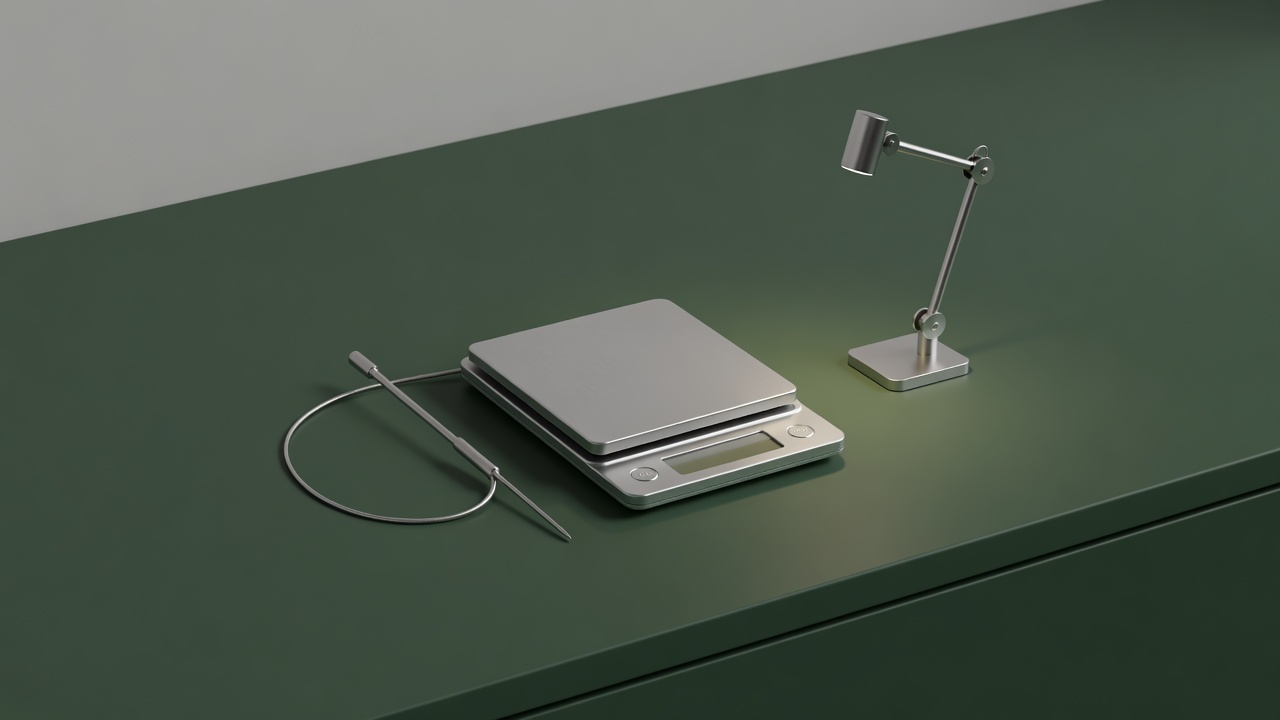
A thermometer is useful only when used correctly
Check the intended temperature range, response characteristics, probe construction and whether the unit is designed for spot checks or sustained cooking. A leave-in probe and an instant-read thermometer solve different problems. Do not leave a device in an oven unless its instructions explicitly allow it, including any cable and display limitations.
Clean the probe as directed and follow current authoritative food-safety advice about placement and safe temperatures. Measuring the wrong location can give false reassurance. A gadget with a phone notification does not remove the need for correct technique, and it should not be treated as a guarantee against foodborne illness.
Countertop appliances need an honest capacity check
For air fryers, multicookers and other compact appliances, compare usable cooking area rather than a container-volume headline alone. Ask whether your normal meal fits in one batch and whether the result depends on leaving space around food. Repeated batches can reduce the convenience you expected and change the energy comparison.
Measure the intended location, required clearances and the route to a suitable outlet. Follow the manufacturer’s ventilation and electrical instructions. An appliance stored beneath a cupboard may need to be moved before operation. If moving it is inconvenient, include that effort in the buying decision rather than assuming it will always remain ready to use.
| Upgrade | Useful evidence | Common hidden cost |
|---|---|---|
| Digital scale | Suitable range and readable display | Battery changes and limited small-load accuracy |
| Food thermometer | Appropriate probe and operating instructions | Cleaning and correct measurement technique |
| Compact cooking appliance | Normal meal fits in usable cooking area | Washing, storage and repeated batches |
| Task lighting | Light reaches the preparation surface | Installation, power access and cleaning |
Affordable improvements can beat another appliance
Move frequently used items into easy reach, add a stable organizer suited to the cupboard, or improve the light falling on the cutting area. Check whether adhesive fittings suit the surface and whether a rental agreement limits alterations. Avoid modifications near heat, water or electrical fittings without appropriate guidance.
Water-saving fittings also require context. A suitable aerator can change flow at a tap, but compatibility, pressure, hot-water behavior and hygiene matter. Do not treat a lower flow figure as automatic whole-house savings. The relevant question is whether the fitting reduces unnecessary use while preserving the job it needs to do.
Reasons to buy
- A repeated task becomes clearer or easier
- The tool fits your storage and cleaning routine
- A basic model supplies the needed function
Reasons to pause
- The benefit depends on rarely used modes
- Cleanup exceeds the effort saved
- The same job is already handled well
An energy claim for a compact appliance should identify the meal, batch count, cooking method and comparison appliance. Faster cooking alone does not establish the annual saving in your household.